
Mobile Game Ads have become a big part of digital marketing especially through medias like Instagram, TikTok, and YouTube.
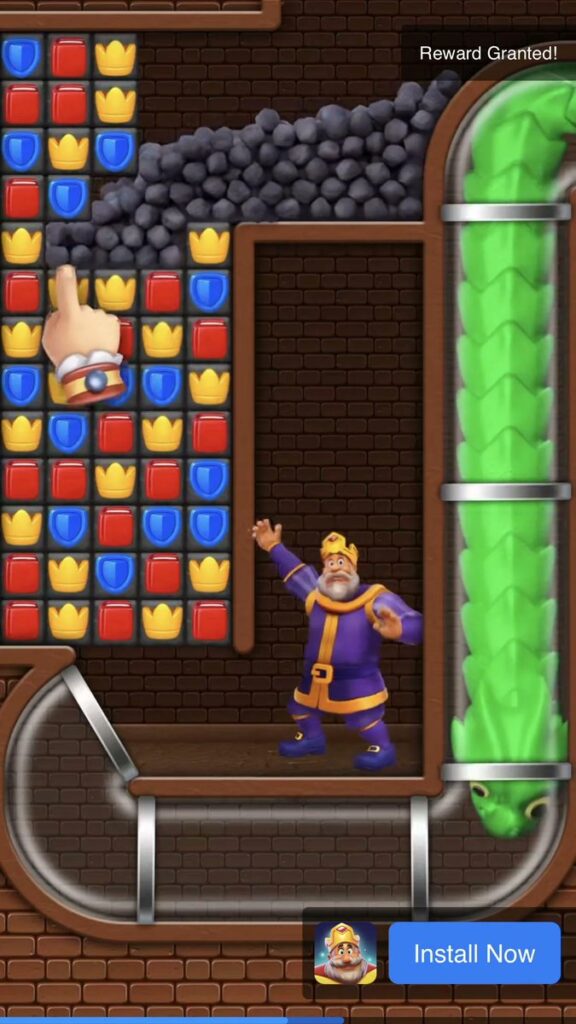
Mobile gaming has become one of the most aggressive and successful sectors in digital marketing. Today, mobile game companies are more than developers, they are performance marketing experts.
Games such as Royal Match, Township, Royal Kingdom, Little Farm Story, and Top War: Battle Game are all games whose advertisements are featured heavily across YouTube, Instagram, and TikTok. They also tend to be in advertisements of other games such as if you wanted to receive a free reward, but was made to watch an ad first. They use advanced advertising strategies designed to maximize installs, engagement, and long-term revenue.
Mobile game advertising combines psychology, algorithm optimization, and large-scale data analysis to create ads that spread across social media platforms at massive scale.
Mobile game advertising strategy has become one of the most powerful approaches in digital marketing today.
This blog explains how mobile game ads work, why they appear seemingly everywhere online, and what digital marketers can learn from this strategy.
What is mobile game advertising in digital marketing?
Mobile game advertising is a performance-based marketing strategy designed to drive app installs and user engagement through paid advertising platforms.
Unlike traditional advertising, mobile game marketing focuses heavily on measurable outcomes such as:
- Cost per Install (CPI)
- Return on ad spend (ROAS)
- Customer lifetime value (LTV)
- Retention rates
These metrics allow companies to quickly determine whether a campaign is profitable and scale advertising accordingly.
Many mobile gaming companies spend millions of dollars testing advertisements across multiple platforms until they identify ads that generate the most installs.
How mobile game advertising strategy works on YouTube
YouTube has become a powerful channel for mobile game advertising because video content allows developers to demonstrate gameplay while capturing user attention.
Hook-based advertising
Most mobile game ads begin with a strong visual hook in the first few seconds.
Common examples include:
- A puzzle being solved incorrectly
- A countdown timer being shown urgently / timer gets bigger in the corner or turns different colors as approaching 0
- A player failing an easy challenge
- Strategy game with constant failure or an easy game that is easily collecting tons of coins/dollars/currency.
These strategies create curiosity and encourage viewers to continue watching the advertisement.
Algorithm Optimization

YouTube’s advertising system rewards content that keeps viewers engaged.
Mobile game advertisers therefore optimize ads to increase:
- Watch time
- Click-through rate
- Engagement
Companies constantly test multiple versions of the same ad to determine which performs best.
Mobile game advertising strategy on Instagram

Instagram has also become a key platform for mobile game marketing.
Developers use Instagram advertising formats such as:
- Story ads
- Reels ads
- Carousel ads
- Sponsored posts
These ads are designed to blend into social media feeds so that they feel similar to organic content.
Mobile game advertising inside other games

Another major part of mobile game advertising happens inside other mobile games. Many mobile games allow players to earn rewards such as coins, gems, or extra livs by watching short advertisements.
This system is known as rewarded video advertising, and it is one of the most effective advertising formats in the mobile gaming industry.
Instead of interrupting the player unexpectedly, the game offers a voluntary choice: watch an advertisement and receive an in-game reward.
Reward-based advertising
Players often encounter prompts such as:
- “Watch an ad for free gems”
- “Watch an ad to unlock an extra life”
- “Watch an ad to double your coins”
When players accept the offer, a short advertisement plays. These ads often promote other mobile games.
Because players receive a reward in exchange for watching the ad, they are more likely to watch the advertisement fully. This leads to higher engagement and conversion rates compared to traditional advertisements.
Why rewarded ads are so effective
Rewarded ads work well because they align the interests of both the advertiser and the player.
Benefits for advertisers include:
- Higher ad completion rates
- Increased user engagement
- Improved conversion rates
Benefits for players include:
- Free in-game currency
- Extra gameplay opportunities
- Optional ad viewing instead of forced interruptions
Many large mobile game developers use this system to cross-promote their games and attract new players.
Mobile game advertising strategy on TikTok
TikTok has rapidly become one of the most important platforms for mobile game advertising.
Because TikTok’s algorithm prioritized engaging short-form videos, mobile game companies have adapted their advertising strategy to match the style of viral content on the platform.
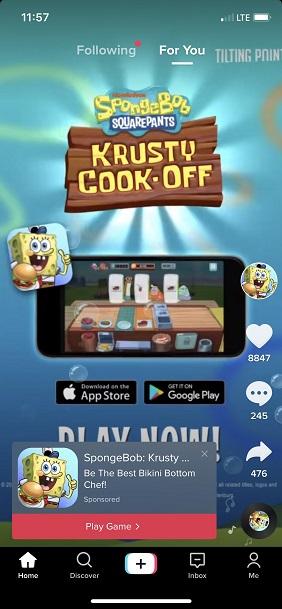
Short-form gameplay hooks
Most TikTok mobile game ads follow a similar structure:
- A strong hook in the first 2-3 seconds
- Quick gameplay demonstration
- A challenge or puzzle moment
- A call-to-action encouraging downloads
These short videos often resemble typical TikTok content rather than traditional advertisements.
Influencer-style advertisements

Many mobile game ads on TikTok feature creators or actors reacting to gameplay.
Examples include:
- Someone trying to beat a puzzle level.
- A player reacting dramatically to losing.
- A challenge inviting viewers to try the game themselves.
These ads feel similar to user-generated content, which helps them perform better within TikTok’s algorithm.
Why TikTok is powerful for mobile game marketing
TikTok allows mobile game companies to reach massive audiences quickly.
The platform’s algorithm promotes videos based on engagement rather than follower count, which means a successful ad can reach millions of viewers.
This makes TikTok a powerful tool for app install campaigns and mobile game promotion.
User-generated style content
Many mobile game ads imitate content created by everyday users.
For example, an advertisement might show someone reacting emotionally to a difficult level or trying to solve a puzzle challenge.
This approach makes advertisements appear more authentic and increases engagement rates.
Re-targeting audiences
Mobile game companies also rely heavily on re-targeting strategies.
Advertising campaigns often target users who:
- Previously watched an ad.
- Visited the app store page.
- Installed the game but stopped playing.
Re-targeting allows developers to bring players back and increase long-term revenue.
Why mobile game advertising is so effective
Data-driven Marketing
Mobile gaming companies rely heavily on data to determine whether advertisements are successful.
If the cost of acquiring a user is lower than the revenue generated by that user, companies will increase advertising spending.
For example:
- Cost per install: $3
- Average player spending: $10
This model makes advertising highly profitable.
Large-scale creative testing
One of the most important aspects of mobile game marketing is creative testing.
Companies may test dozens or even hundreds of advertisement variations simultaneously.
These tests may change elements such as:
- Background music
- Gameplay scenes
- Captions
- Call-to-Action buttons
This process allows advertisers to quickly identify the most effective advertisements.
The psychology behind mobile game advertisements
Cognitive dissonance
Many mobile game advertisements intentionally show players making obvious mistakes.
This creates frustration for viewers, making them feel they could perform better.
As a result, viewers are more likely to click the advertisement and download the game.
“Rage Bait” Engagement
Some ads purposely trigger emotional reactions such as frustration or curiosity.
These emotional responses increase engagement and make advertisements more likely to spread across social media platforms.
What digital marketers can learn from mobile game advertising
Mobile game developers have pioneered several marketing techniques now used across many industries.
Key lessons include:
- Test multiple ad variations
- Use data to guide marketing decisions
- Understand platform algorithms
- Focus on measurable outcomes
These strategies are now common in industries such as e-commerce, software marketing, and online services.
The future of mobile game advertising
The future of mobile game marketing will likely involve increased use of artificial intelligence and automation.
Emerging technologies may allow advertisers to:
- Generate personalized ads automatically.
- Predict which users are likely to install games.
- Optimize advertising budgets in real time.
As these technologies evolve, mobile gaming companies will likely remain leaders in digital marketing innovation.
Closing thoughts
Mobile game advertising has reshaped how digital marketing operates on platforms like YouTube, Instagram, TikTok, and through other games. By combining psychological triggers, performance data, and continuous experimentation, mobile gaming companies have created highly scalable marketing systems.
For marketers studying digital advertising today, understanding mobile game marketing strategies provides valuable insight into how modern performance marketing works.
Daara Alavi | Mobile Game Advertising Strategy impact across Social Media
Leave a Reply