
by. YuChao Simon Guo
AI in Digital Marketing: The Future of Data-Driven Brand Strategy
AI in digital marketing is rapidly transforming how businesses design campaigns, analyze customer behavior, and optimize brand strategy. In today’s competitive landscape, companies rely on artificial intelligence to automate processes, personalize experiences, and make data-driven decisions that improve marketing performance.
As digital platforms become more advanced, AI in digital marketing is no longer optional — it is essential. From predictive analytics to intelligent content generation, AI helps brands increase efficiency and improve return on investment (ROI).
What Is AI in Digital Marketing?
AI in digital marketing refers to the use of artificial intelligence technologies — such as machine learning, natural language processing, and predictive analytics — to improve marketing strategies and customer engagement.
Instead of relying solely on human intuition, marketers now use AI tools to analyze massive amounts of data in seconds. These systems can detect patterns, predict trends, and recommend strategic actions.
How AI Analyzes Consumer Behavior
AI systems track:
- Website browsing activity
- Purchase history
- Click-through rates
- Social media engagement
- Email interactions
For example, Google uses AI algorithms to improve ad targeting and bidding strategies. Learn more about Google’s AI initiatives here:
https://blog.google/technology/ai/
By analyzing data at scale, AI in digital marketing helps brands understand customers more deeply than ever before.
Benefits of AI in Digital Marketing
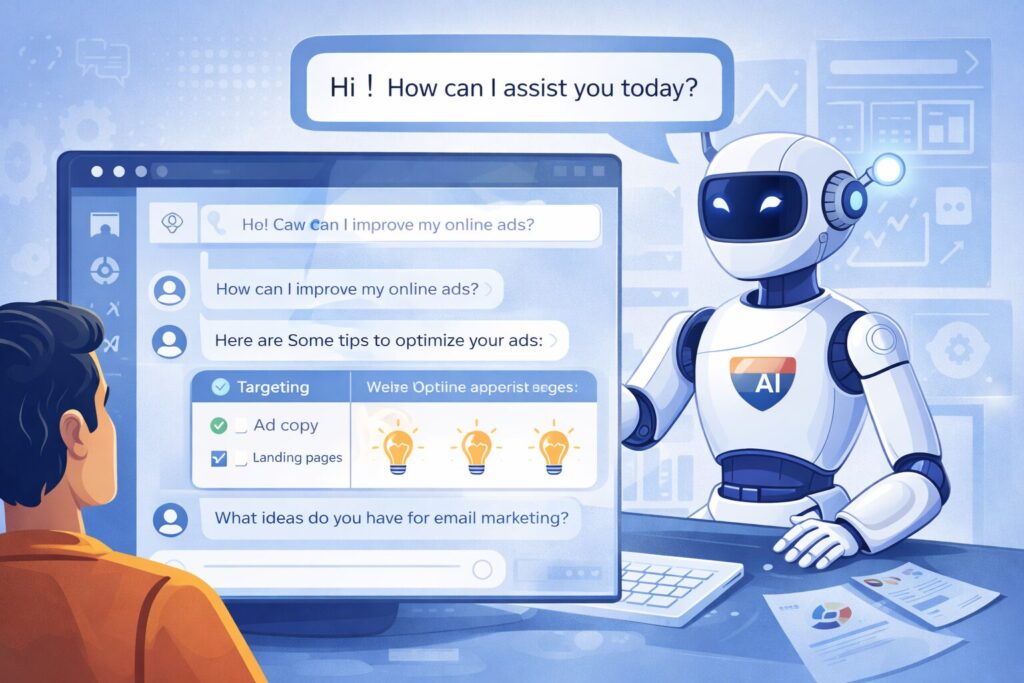
AI in digital marketing provides several strategic advantages.
1. Personalization at Scale
Consumers expect customized experiences. AI allows businesses to:
- Recommend products based on past behavior
- Deliver dynamic website content
- Personalize email campaigns
- Customize advertisements
Platforms like Amazon and Netflix rely heavily on AI-powered recommendation systems.
Personalization increases customer satisfaction and improves conversion rates.
2. Marketing Automation
Automation is one of the biggest advantages of intelligent marketing systems. AI tools can automate:
- Email sequences
- Customer segmentation
- Chatbot responses
- Social media posting
- Lead scoring
Automation reduces manual workload and increases operational efficiency.
3. Predictive Analytics and Data-Driven Decisions
AI analyzes historical data to predict future outcomes. This allows marketers to forecast:
- Purchase probability
- Customer lifetime value
- Churn risk
- Demand trends
According to research by SEMrush, AI-driven marketing strategies are becoming increasingly common worldwide:
https://www.semrush.com/blog/artificial-intelligence-marketing/
Predictive analytics allows companies to allocate budgets more effectively and improve ROI.
AI in Digital Marketing and SEO Strategy
Search engine optimization has evolved significantly due to AI.
Google’s search algorithms use AI systems such as RankBrain to interpret user intent and deliver more relevant search results. This means content creators must focus on:
- User intent
- High-quality content
- Keyword relevance
- Structured formatting
- Internal linking
AI-powered SEO tools like Ahrefs and SEMrush help marketers analyze competitors and optimize keyword strategies.
If your blog has other SEO-related posts, you can link internally here. For example:
Learn more about SEO strategy in our guide to digital marketing fundamentals.
Internal linking strengthens site authority and improves user navigation.
AI in Digital Marketing and Content Creation
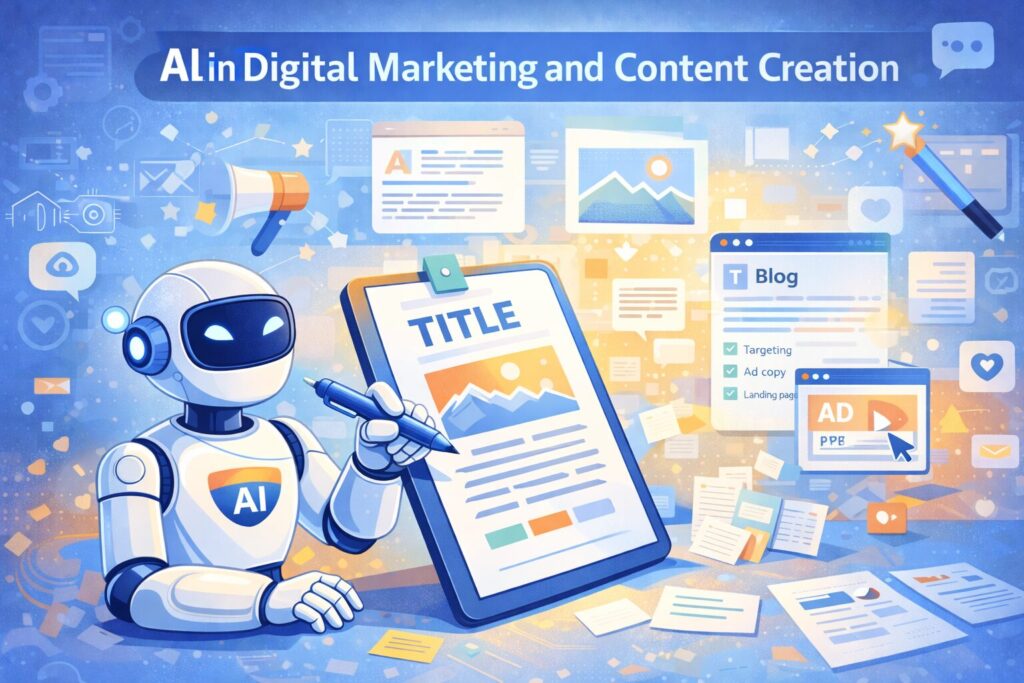
AI writing tools are changing how marketers create content. Platforms like ChatGPT assist with:
- Blog writing
- Product descriptions
- Ad copy
- Email campaigns
However, AI-generated content still requires human editing to maintain authenticity and brand voice.
AI-powered marketing should enhance creativity — not replace it.
Challenges of AI in Digital Marketing
Despite its advantages, AI also presents challenges.
Data Privacy and Ethics
Consumers are increasingly concerned about:
- Data tracking
- Privacy protection
- Algorithm transparency
Regulations such as GDPR have forced companies to reconsider data collection practices.
Brands must balance personalization with ethical responsibility.
Over-Reliance on Automation
While AI improves efficiency, excessive automation can reduce brand authenticity. Emotional intelligence and human creativity remain essential components of marketing success.
AI should support marketers, not replace them.
The Future of AI in Digital Marketing
AI technology in branding will continue to evolve in the coming years. Emerging trends include:
- Voice search optimization
- AI-powered video editing
- Real-time personalization
- Hyper-targeted advertising
- Advanced predictive modeling
Companies that integrate AI strategically will gain a competitive advantage.
As artificial intelligence becomes more sophisticated, marketers must adapt to new technologies while maintaining customer trust.
Conclusion
AI in digital marketing is reshaping how brands operate in the digital era. From automation and personalization to predictive analytics and SEO optimization, AI offers powerful tools that improve efficiency and performance.
However, the future of marketing lies in the balance between technology and human creativity. Businesses that combine AI innovation with ethical responsibility will thrive in an increasingly digital world.
Artificial intelligence in marketing is not just a trend — it is the foundation of modern brand strategy.
Leave a Reply