

Transformative digital marketing techniques are essential for brands that want to compete in today’s rapidly evolving online environment. As algorithms change, privacy regulations tighten, and consumer expectations continue to rise, businesses can no longer rely on isolated campaigns or one-off tactics. Instead, they must build adaptive marketing systems that learn, improve, and scale over time.
In practice, transformative digital marketing techniques connect strategy, creative execution, data analysis, and technology into one cohesive growth engine. Rather than chasing trends, companies that adopt this approach focus on clarity, structured testing, and continuous refinement. As a result, they generate not only stronger performance metrics but also deeper customer trust and long-term brand equity.
Why Transformative Digital Marketing Techniques Matter Today
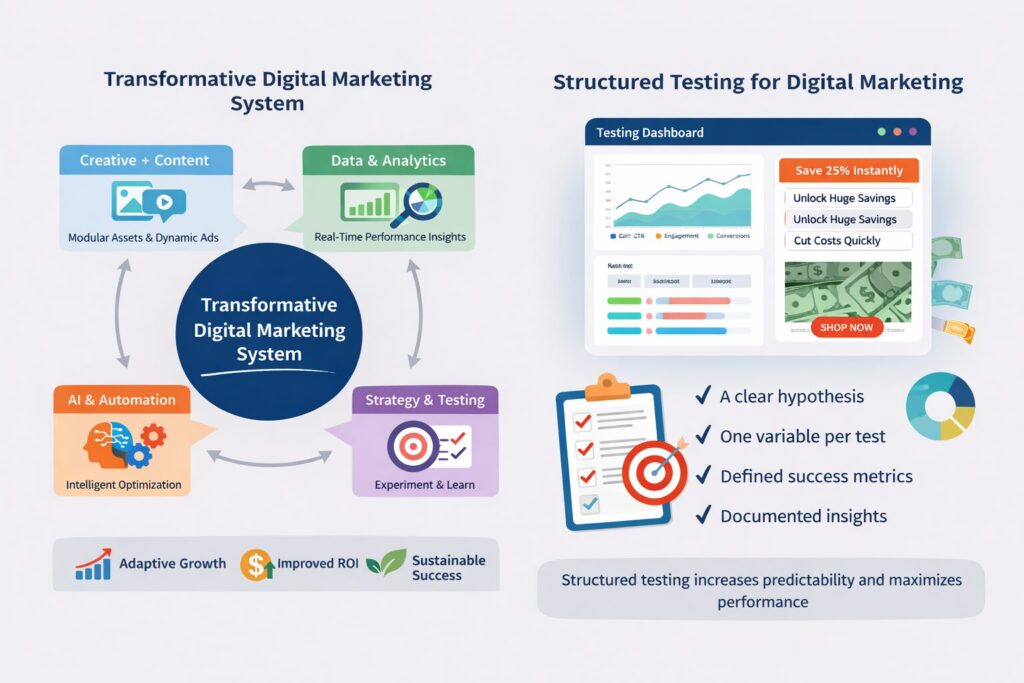
Marketing used to be more predictable. A brand could launch a campaign, measure results, and adjust months later. However, today’s digital landscape moves much faster. Platforms such as Google and Meta use machine learning systems that constantly evaluate performance signals and adjust delivery in real time.
Because of this shift, marketing must now be iterative. Creative assets need to be modular. Messaging must be clear and adaptable. Moreover, data must guide decisions rather than simply decorate reports. In other words, agility is no longer a competitive advantage; it is a requirement.
Transformative digital marketing techniques matter because they:
- Align paid, owned, and earned media
- Enable structured experimentation
- Improve budget efficiency
- Strengthen brand positioning
- Support long-term visibility
- Reduce reliance on reactive decision-making
Ultimately, transformation is not about doing more marketing. Instead, it is about doing smarter, more connected marketing.
Building a System TO increasE YOUR Transformative Digital Marketing Techniques
One of the most important transformative digital marketing techniques is system thinking. Instead of launching disconnected initiatives, brands should design marketing ecosystems where every channel reinforces the others.
For example:
- Paid advertising drives traffic.
- Landing pages convert interest into action.
- Email nurtures relationships.
- SEO content builds authority over time.
- Social content reinforces brand identity.
When these components work together, performance compounds. Conversely, when channels operate in isolation, growth becomes inconsistent and unpredictable.
Furthermore, insights from one channel should inform another. If paid search reveals high-performing keywords, those insights should guide organic content development. Similarly, email engagement data can refine audience segmentation for paid campaigns. This level of integration is what transforms activity into strategy.
According to guidance from Google Search Central, helpful and people-focused content improves long-term discoverability. Therefore, aligning paid insights with organic content strategy increases overall efficiency and strengthens search performance over time.
Structured Testing as a Core Technique
Another foundational element of transformative digital marketing techniques is disciplined testing. Many businesses experiment randomly. However, sustainable growth requires structured experimentation with clear intent.
A strong testing framework includes:
- A clear hypothesis
- One primary variable per test
- Defined success metrics
- Controlled environments
- Documented insights
For instance, if you test a new headline focused on cost savings, you should keep imagery, audience targeting, and offer constant. This way, you can confidently determine what influenced performance.
In addition, platforms like Google Ads automatically evaluate combinations of creative assets. Because of this, providing multiple headline and description variations helps the system learn more effectively. However, automation does not eliminate the need for thoughtful structure. Instead, it increases the importance of strong inputs.
Over time, structured testing builds institutional knowledge. As a result, your marketing becomes more predictable, scalable, and efficient.
Responsible Use of AI in Digital Marketing
Artificial intelligence now plays a significant role in advertising optimization, audience modeling, and budget allocation. However, transformative digital marketing techniques rely on AI as a support tool rather than a replacement for strategy.
AI can assist with:
- Generating creative variations
- Identifying performance patterns
- Optimizing bidding strategies
- Forecasting budget pacing
- Segmenting audiences dynamically
Nevertheless, strategic direction must remain human-led. Brand voice, positioning, and ethical standards cannot be outsourced to automation.
Organizations such as the National Institute of Standards and Technology emphasize transparency and accountability in AI systems. Similarly, marketing teams must maintain oversight to ensure consistency and protect brand integrity.
Therefore, the most effective approach blends machine efficiency with human judgment. Technology accelerates execution, while strategy defines direction.
Conversion-Focused Experience Design
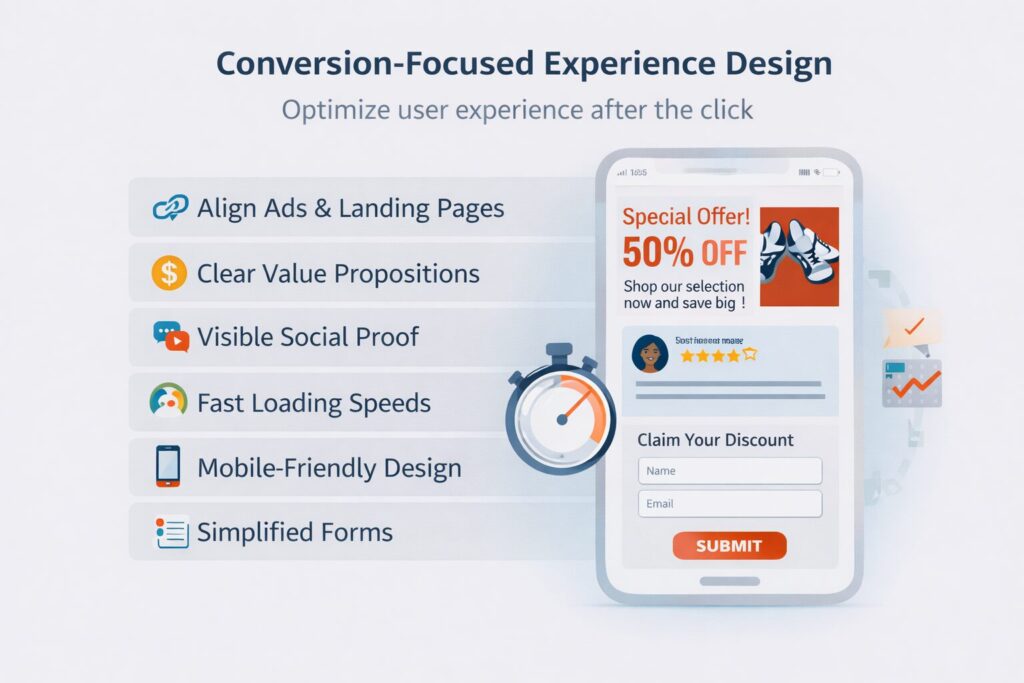
Driving traffic is only part of the equation. Transformative digital marketing techniques also prioritize the user experience after the click. In fact, improving conversion rates often produces a greater return than increasing traffic volume.
To improve conversion rates, brands should ensure:
- Message alignment between ads and landing pages
- Clear value propositions above the fold
- Visible social proof such as testimonials
- Fast loading speeds
- Mobile-friendly layouts
- Simplified forms and checkout flows
Additionally, microcopy plays a larger role than many realize. Clear calls to action, transparent pricing language, and concise benefit statements reduce friction and build confidence.
As a result, traffic converts more efficiently, and advertising spend works harder. Instead of continuously increasing budget, brands can extract more value from existing traffic.
Content That Builds Long-Term Authority
While paid campaigns generate immediate visibility, content marketing builds credibility and organic reach. Therefore, integrating content strategy into your transformative digital marketing techniques is critical.
High-quality content should:
- Address real customer questions
- Provide actionable insight
- Reflect brand expertise
- Align with keyword intent
- Offer original perspective
In addition, consistency matters. Publishing sporadically limits compounding growth. However, publishing with purpose creates steady authority.
Over time, this approach reduces reliance on paid media while strengthening search visibility. Furthermore, strong content increases brand recall, supports retargeting efforts, and improves conversion rates across channels.
For deeper strategy support, you may also explore our internal guide to performance marketing strategy.
Data Infrastructure and Measurement Discipline
Another overlooked aspect of transformative digital marketing techniques is measurement accuracy. Without reliable data, optimization becomes guesswork.
Therefore, brands should prioritize:
- Accurate conversion tracking
- Clear attribution modeling
- Defined key performance indicators
- Consistent reporting cadence
Moreover, metrics should align with business objectives. For example, optimizing solely for clicks can distort performance. Instead, focusing on qualified leads, customer lifetime value, or revenue growth ensures alignment with long-term goals.
As privacy standards evolve, first-party data becomes increasingly valuable. Building email lists, loyalty programs, and direct customer relationships protects performance from external platform volatility.
Cross-Functional Alignment
Transformation does not happen within a single department. Marketing must collaborate with sales, product, and leadership teams to create consistent messaging and shared goals.
For example, sales teams can provide insights into objections and customer motivations. Product teams can highlight differentiators and roadmap priorities. When these insights feed into marketing strategy, messaging becomes more relevant and persuasive.
Consequently, cross-functional communication strengthens positioning and improves overall customer experience.
Practical Implementation Roadmap
To implement transformative digital marketing techniques effectively, follow this structured rhythm:
- Clarify positioning and audience targeting
- Develop a messaging framework
- Build modular creative assets
- Implement accurate tracking and analytics
- Launch structured testing cycles
- Review performance weekly
- Document insights monthly
- Adjust strategy quarterly
Because consistency drives improvement, this rhythm creates sustainable momentum. Small, disciplined refinements compound into significant growth over time.
Final Thoughts on Transformative Digital Marketing Techniques
Transformative digital marketing techniques do not require a dramatic overhaul. Instead, they rely on disciplined improvement, thoughtful integration of technology, and ongoing refinement.
When strategy, creative, analytics, and technology align, marketing becomes more predictable and more impactful. In addition, structured systems reduce stress, clarify priorities, and support smarter resource allocation.
Over time, this consistency builds stronger performance, deeper trust, and more resilient growth.
If your organization is ready to move beyond fragmented tactics and toward a cohesive growth system, transformative digital marketing techniques provide the structure to get there. The brands that embrace this approach will not only adapt to change. They will lead it.tructure to get there.
Leave a Reply