

Why Email Marketing Optimization Still Matters in 2026

Learn Email Marketing Best Practices
Despite the rise of social media, paid ads, and AI chatbots, email marketing remains one of the highest ROI digital channels. According to recent industry studies, email consistently delivers an average return of $36 for every $1 spent.
But simply sending emails is not enough. Without proper email marketing optimization, businesses struggle with low open rates, poor engagement, and high unsubscribe rates.
Ensuring your email marketing strategy follows the best practices ensures:
- Higher open rates
- Better click-through rates
- Stronger customer relationships
- Increased conversions
In this guide, we’ll explore actionable strategies you can implement immediately to improve your results.
What Is Email Marketing Optimization?
Email marketing optimization is the process of improving email performance through data-driven adjustments. This includes refining subject lines, segmenting audiences, improving timing, personalizing content, and analyzing campaign metrics.
Optimization focuses on continuous improvement — testing, learning, and adjusting.
Audience Segmentation: The Foundation of Email Marketing Optimization
Why Segmentation Boosts Performance
Sending the same email to your entire list no longer works. Modern consumers expect relevance.
Segmentation allows you to group subscribers based on:
- Purchase behavior
- Website activity
- Location
- Engagement history
- Demographics
Segmented campaigns can generate significantly higher revenue than non-segmented campaigns.
For more insight into segmentation best practices, see this HubSpot guide:
https://blog.hubspot.com/marketing/email-segmentation
Behavior-Based Segmentation
Behavioral segmentation tracks how users interact with your brand.
Examples:
- Abandoned cart emails
- Post-purchase follow-ups
- Re-engagement campaigns
These automated sequences are highly optimized because they respond to real-time behavior.
Email Marketing Funnel Visualization
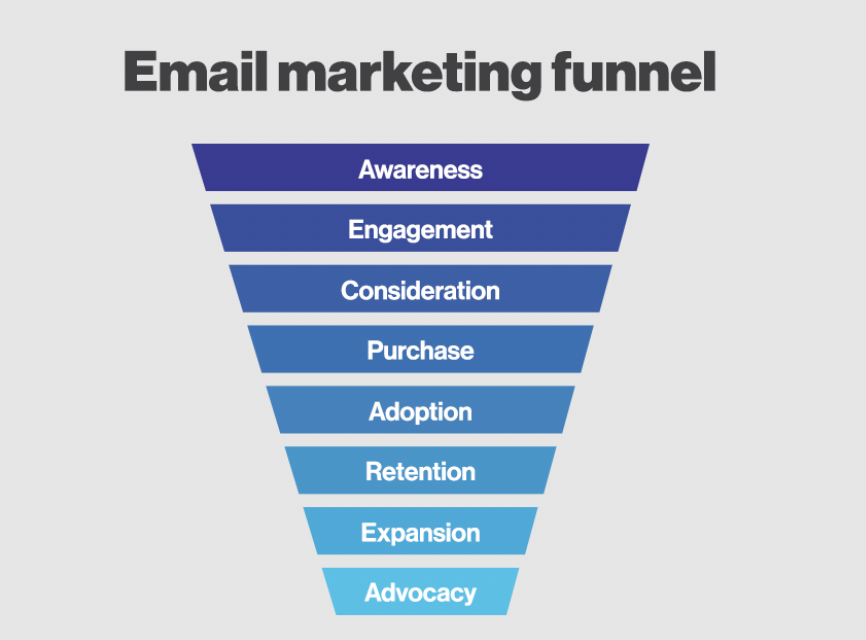
Image Title: Email Marketing Optimization Funnel
ALT Text: visual diagram showing stages of email marketing optimization funnel including segmentation, personalization, automation, and analytics
Personalization: The Core of Email Marketing Optimization
Beyond First-Name Personalization
Using “Hi John” is no longer enough.
Advanced personalization includes:
- Product recommendations
- Dynamic content blocks
- Location-based offers
- Purchase history integration
AI-powered email tools now automatically customize entire sections of an email based on user behavior.
Dynamic Content and AI Integration
Modern email platforms integrate AI to:
- Predict optimal send times
- Suggest subject lines
- Automatically optimize content layout
Tools like Mailchimp and Klaviyo use predictive analytics to improve engagement rates.
External reference:
https://mailchimp.com/resources/email-marketing-benchmarks/
Subject Line Optimization: Increase Open Rates
Your subject line determines whether your email gets opened or ignored.
Best Practices for Optimized Subject Lines
- Keep under 50 characters
- Use curiosity strategically
- Avoid spam trigger words
- Include personalization where appropriate
- Test emojis carefully
Example A/B Test:
Version A: “Exclusive Offer Inside”
Version B: “Matteo, Your 24-Hour Early Access Starts Now”
Measure open rate and adjust accordingly.
A/B Testing for Email Marketing Optimization
What to Test
A/B testing is essential for continuous improvement.
Test:
- Subject lines
- CTA buttons
- Send times
- Email layout
- Images vs. text ratio
Only test one variable at a time to maintain data clarity.
Measuring Optimization Metrics
Track:
- Open Rate
- Click-Through Rate (CTR)
- Conversion Rate
- Bounce Rate
- Unsubscribe Rate
Google Analytics 4 can be integrated with email campaigns to measure conversion behavior beyond clicks.
Internal link suggestion:
Link to another Digital Fabulous article such as:
“Understanding Conversion Rate Optimization in 2026”
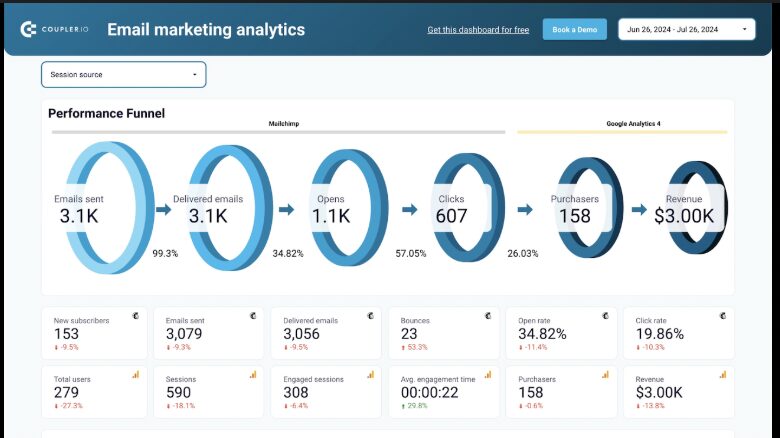
Email Analytics Dashboard
Image Title: Email Marketing Analytics Dashboard
ALT Text: dashboard displaying email marketing optimization metrics including open rate, click-through rate, and conversions
Automation Workflows: Scaling Email Marketing Optimization
Automation ensures that emails are sent at the right time without manual effort.
Essential Automated Sequences
- Welcome series
- Abandoned cart reminders
- Lead nurturing sequences
- Re-engagement campaigns
- Post-purchase upsell flows
Automation improves consistency and performance while reducing workload.
Optimizing Send Times
AI-driven email tools analyze user behavior to determine the best time to send.
Instead of guessing, rely on:
- Historical engagement data
- Time zone segmentation
- Behavioral triggers
Send-time optimization can significantly increase open rates.
Deliverability Optimization: Protect Your Sender Reputation
Even the best emails fail if they land in spam.
Improve Email Deliverability
- Clean your email list regularly
- Remove inactive subscribers
- Authenticate your domain (SPF, DKIM, DMARC)
- Avoid excessive promotional language
- Maintain consistent sending patterns
For deeper understanding, review this guide from SendGrid:
https://sendgrid.com/blog/email-deliverability-guide/
Compliance and Privacy Considerations
Email marketing must comply with:
- CAN-SPAM (U.S.)
- GDPR (Europe)
- CCPA (California)
Always:
- Provide clear unsubscribe options
- Obtain explicit consent
- Avoid misleading subject lines
Trust is a critical component of long-term optimization.
Future Trends in Email Marketing Optimization
Looking ahead to late 2026 and beyond:
- AI-generated email drafts
- Predictive personalization
- Interactive email content
- AMP-powered dynamic emails
- Voice-activated inbox integration
Brands that adopt data-driven optimization will outperform competitors relying on outdated bulk email tactics.
Final Thoughts on The Best Email Marketing Practices
Email marketing remains one of the most powerful digital marketing channels — but only when optimized strategically.
To recap, effective email marketing optimization requires:
- Segmentation
- Personalization
- A/B testing
- Automation
- Analytics
- Deliverability best practices
By continuously analyzing and refining your campaigns, you create a system that improves over time and drives sustainable growth.
Leave a Reply